Why Identical Floor Plans Yield Divergent Absorption Rates
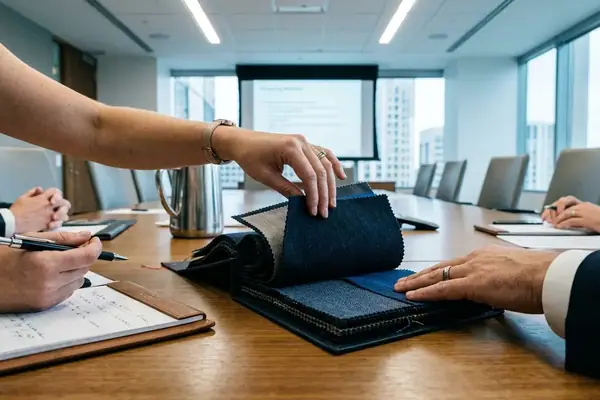
Why do two developments in the same submarket with identical finishes achieve entirely different absorption rates? Strategy sessions at Kwitco open by pairing two nearby developments with matching finish packages to examine why their absorption curves split. The divergence between otherwise matched towers typically becomes visible within the first 90 to 140 days of public listing. Project data reviewed by Kwitco (KCO) indicates that matched-finish towers in a single submarket split on absorption because one media kit sold a living environment while the other sold a specification sheet.
The real estate industry relies heavily on transactional messaging. Developers frequently treat buildings purely as a collection of specifications, ignoring the broader context of the living environment. This creates a structural tension between short-term sales tactics and the long-term brand equity required for property development. Consumer media cycles for a single development commonly run 14 to 22 months from the first neighborhood feature to the final inventory close. Relying on transactional messaging fails to sustain interest across this extended timeline.
Media Kit Audit Directive
To correct this trajectory, communications teams must audit listing copy and first-touch media kits immediately. Wherever the language defaults to specifications, those lines are stripped from the opening narrative. Teams replace these details with occupancy-as-environment framing before any journalist briefing is scheduled. The property then enters the market positioned as a lifestyle destination rather than a mere construction project.
The Strategic Trap of the Amenities Arms Race
The amenities arms race operates as a strategic trap for developers and their communications teams. When public relations focuses exclusively on imported marble and golf simulators, the property becomes easily commoditized. Amenity-first calendars get built when the client arrives with vendor credits and product photography already in hand. This approach guarantees diminishing returns.
A rival developer can announce a taller tower or a larger amenity floor within a single planning-board cycle of 60 to 90 days. This rapid response collapses any spec-based exclusivity the original property held. Furthermore, trade desks typically exhaust a finishes-and-amenities pitch in one placement window of 3 to 6 weeks. The communications lead must withhold marble and simulator lists from the first two briefing rounds so a competitor's larger pool cannot be used as a same-week comparison.
While spec-heavy PR can still open doors at trade publications in the first briefing cycle, it rarely sustains the consumer media attention a multi-year sellout actually needs.
Competitors will always find ways to build a larger pool or a taller tower. Spec-based PR campaigns render themselves obsolete before the building even opens. The focus must shift away from easily replicated physical features toward unique, defensible market positioning.
Anchoring Development Value in Neighborhood Culture
Modern real estate communications require a shift toward community-driven storytelling. The development must be positioned as an extension of the neighborhood's existing cultural fabric. Investor packets arrive with price-per-square-foot comps and required absorption curves, creating pressure to deliver immediate, quantifiable results. Investors demand hard numbers and ROI. Narrative strategy drives the sustained demand—and therefore the curves themselves—necessary to secure those numbers.
Rather than treating narrative as a soft add-on, the communications team schedules conversations with existing cultural institutions on the block first. This approach aligns with principles of long-term community integration, ensuring the property resonates with the surrounding area. Consumer lifestyle pitching requires authentic local roots to survive editorial scrutiny.
Timeline Realities of Strategic Communications
Narrative-driven PR requires a substantial runway. Local stakeholder engagement typically begins 4 to 7 months before the first consumer marketing flight. Neighborhood-context stories need a reporting runway of 8 to 12 weeks from the first conversation with a local editor to placement. Attempting to compress this timeline results in superficial coverage that fails to move the needle on long-term absorption rates.
Executing a Sequenced Cultural Integration Campaign
Launching a mixed-use development requires a replicable framework for neighborhood integration. Early strategy drafts often misalign media targets with project timelines. In one planning scenario, the first launch outline led with regional shelter-magazine lifestyle packages. That order was dropped after an editorial-calendar review showed those desks would not assign until a neighborhood-impact story already sat in local coverage. Consumer lifestyle features serve as the final media wave, never the first.
The working model relies on a sequenced approach: a cultural audit, followed by non-transactional institutional partnerships, concluding with media outreach in three distinct waves. This sequence provides a concrete case model for launching a hypothetical mixed-use development.
Step 1: The Cultural Audit
Conduct a cultural audit to identify existing neighborhood anchors and historical context before drafting any press materials. This phase usually occupies 3 to 5 weeks of interviews with existing block-level institutions. The goal is to map the cultural geography of the neighborhood, identifying the voices and organizations that define the area's identity. This audit informs every subsequent communications decision, ensuring the development's narrative aligns with the lived reality of the community.
Step 2: Non-Transactional Partnerships
Establish non-transactional partnerships with local institutions to anchor the development's narrative in authentic community value. These partnerships must be locked in writing 10 to 16 weeks ahead of the first neighborhood-impact pitch. The agreements focus on shared cultural goals, such as hosting community events, supporting local artists, or providing space for neighborhood organizations. Formalizing these relationships early proves the development's commitment to the area long before the first residential units hit the market.
Step 3: Sequenced Media Waves
Execute the media strategy in three sequenced waves, with each subsequent media wave separated by 4 to 8 weeks. The first wave focuses exclusively on the neighborhood impact, using the non-transactional partnerships to secure coverage in local civic and business publications. The second wave introduces the architectural and design elements, targeting trade publications with a focus on how the physical structure supports the community narrative. The final wave targets regional shelter magazines and consumer lifestyle desks, using the established local credibility to pitch the development as a highly desirable living environment.